

Are you finding it hard to get patients in today’s digital world? The way we market plastic surgery has changed a lot. Now, digital marketing is key to growing your practice.
Patients don’t just ask for recommendations anymore. They search online a lot before choosing a surgeon. SEO for plastic surgery helps you reach them when they’re looking for a change.
Your online presence is crucial in today’s competitive medical field. It can make your practice thrive or struggle. Plastic surgeons need smart, focused digital marketing strategies.
This guide will show you how to boost your online presence. You’ll learn to attract more patients with SEO made just for cosmetic surgery.
Understanding the Digital Landscape for Plastic Surgery Practices
The digital world has changed how people look for cosmetic surgery. Now, search engines are the first place people look. Cosmetic surgery SEO is key for practices to find patients online.
Patient behavior has changed a lot. Today’s patients are tech-savvy. They:
- Do lots of online research before seeing a doctor
- Check out surgeons’ credentials online
- Read reviews and testimonials
- Look at before-and-after photos online
Being seen online is very important for surgeons. In big cities, there’s a lot of competition. Surgeons face challenges like:
- Following strict rules on medical ads
- Keeping to professional standards
- Sharing info that’s both promotional and educational
Digital platforms have become the new marketing channels. Getting good search rankings is more important than ads. Surgeons need special digital marketing plans.
It’s key for practices to understand the digital world. Good cosmetic surgery SEO can turn a website into a tool to find new patients.
Why Plastic Surgery SEO Matters for Your Practice?
Digital marketing has changed how medical practices find patients. Plastic surgeons need a strong online presence. This helps attract patients and build trust in a crowded market.
The way patients look for medical services has changed. They don’t just ask friends or look at ads. Now, they do a lot of online research before choosing a doctor.
The Patient Journey Begins Online
Today, patients start their search for plastic surgery online. Here’s what they do:
- They look up information on different procedures.
- They compare doctors’ skills and experience.
- They check out before-and-after photos.
- They read what other patients say.
- They look at online reviews to see how the practice is seen.
Competitive Advantages of Strong Search Rankings
Practices that focus on SEO get big benefits. Being at the top of search results means:
- More people visit your website.
- You get more requests for consultations.
- You become more visible to potential patients.
- You save money by finding patients online.
Building Trust Through Visibility
Being seen at the top of search results makes you seem more credible. Patients think of you as a trusted and well-known doctor.
With the right SEO, plastic surgery practices can make a big change. They can turn online searches into real connections with patients.
Identifying Your Target Audience and Their Search Intent
Knowing who you want to reach is key to good search engine optimization for healthcare. In the world of cosmetic procedure keywords, it’s important to know who looks for certain treatments. This can change how you market online.
People looking for cosmetic procedures usually have one of three reasons:
- Informational Searches: They want to learn about procedures, recovery, and what to expect.
- Navigational Searches: They’re searching for specific plastic surgery places or doctors.
- Transactional Searches: They’re ready to book a consultation or schedule a procedure.
Creating detailed patient profiles means looking into their demographics, where they live, and what motivates them. SEO for healthcare should match these profiles to make content that speaks to them.
Each cosmetic procedure draws in different types of patients. Younger people might look for non-invasive treatments. Older people might search for more serious surgeries. Knowing these patterns helps you use the right keywords to reach them.
Good SEO starts with understanding the patient’s journey. It’s from first curiosity to final consultation.
By looking at what patients ask during consultations, plastic surgeons can make content that meets their needs. This can also help them show up more online.
Keyword Research Strategies for Cosmetic Procedures
Good SEO for plastic surgeons starts with smart keyword research. Knowing what patients search for is key. It helps attract more clients and increase consultations.
Choosing the right keywords for cosmetic practices is important. Surgeons need to study patient search habits. This helps find the best search terms.
Finding High-Value Procedure Keywords
Looking for top keywords means checking a few things:
- How often people search for certain procedures
- Why they’re searching for those procedures
- How competitive each keyword is
| Procedure | Monthly Searches | Competition Level |
| Rhinoplasty | 22,000 | High |
| Breast Augmentation | 18,500 | Medium-High |
| Facelift | 12,300 | Medium |
Local Search Terms That Drive Consultations
Using local keywords boosts your chances of getting more patients. Local search terms help connect patients with nearby surgeons. This makes your marketing more focused.
- City-specific procedure searches
- Neighborhood-based keywords
- Regional medical center references
Long-Tail Keywords for Specific Treatments
Longer, more specific keywords show what patients really want. They often mean patients are serious about getting help. This shows they’ve done their homework.
Knowing what patients are looking for is crucial in plastic surgery marketing.
By doing thorough keyword research, plastic surgeons can improve their online presence. This helps bring in more patients who are ready to consult.
Optimizing Your Plastic Surgery Website for Search Engines
Getting your plastic surgeon’s website noticed online is key. Your website’s design is very important. It helps attract new patients and gets you higher in search results.
Search engines like websites that are easy to use and have good content. They look for clear, helpful information and a smooth experience for users.
Here are some important steps for a good website:
- Make title tags that grab attention with the right keywords.
- Write meta descriptions that make people want to click.
- Use header tags in a smart order.
- Make your URLs easy to read and understand.
When it comes to your website’s design, pay close attention to details. It’s important to optimize images by using good file names and alt text. Search engines like websites that are easy to use and have lots of information about medical procedures.
Schema markup is a special way to make your website better for search engines. It helps them understand your content better. This can make your website stand out in search results.
Schema can show things like:
- Practice ratings
- Available procedures
- Physician credentials
- Contact information
Linking your website’s pages is also important. It helps search engines see how your site is organized. By linking related pages, you make your website easier to use and for search engines to crawl.
The ultimate goal of website optimization is creating a site that serves both search engines and potential patients seamlessly.
Creating Compelling Content That Converts Patients
Content creation is key for medical SEO. It helps turn website visitors into potential patients. Good content builds trust and shows you know what you’re doing.
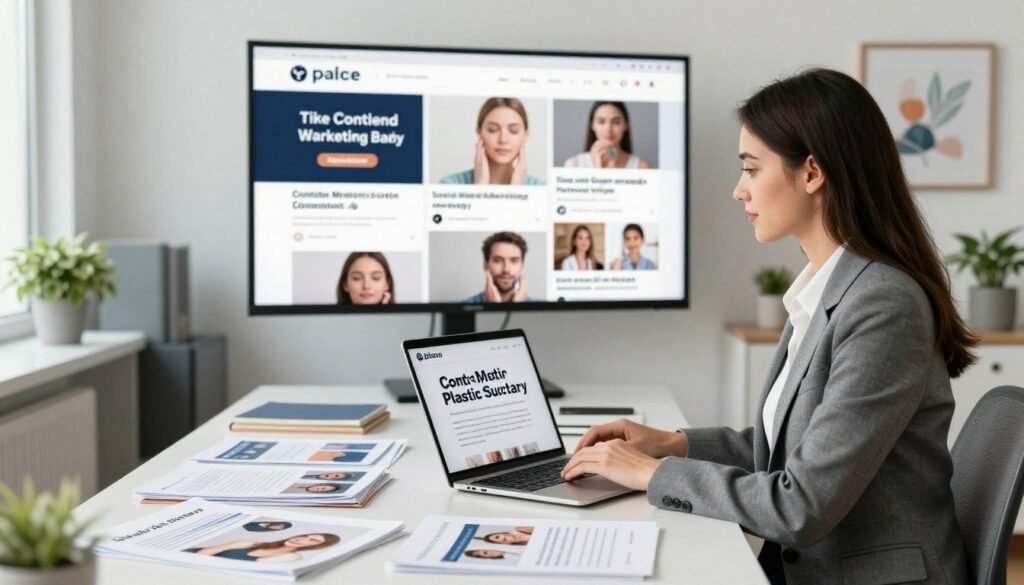
Plastic Surgery Content Marketing Strategies
Medical SEO needs more than just keywords. People want detailed, trustworthy info. They want to know you can help them.
Before and After Galleries That Rank
Visuals are important in plastic surgery marketing. Good before and after galleries can boost your search rank. They also show off your skills.
- Use descriptive, keyword-rich file names for images
- Include detailed alt text for each image
- Organize galleries by specific procedure types
- Ensure HIPAA compliance with patient imagery
Educational Blog Posts and Procedure Guides
Writing detailed educational content makes you a trusted expert. It helps more people choose your practice.
“The most successful medical websites provide genuine value through comprehensive, patient-focused content.”
- Develop content based on patient FAQs
- Create procedure-specific guides
- Use clear, accessible language
- Update content regularly to maintain relevance
Pro tip: Focus on creating genuinely helpful content that answers patient questions and demonstrates medical expertise.
Local SEO Tactics for Attracting Nearby Patients
Local SEO helps surgeons find patients close by. Plastic surgery offices need people nearby. They want to be close and easy to get to.
Google My Business is key for local marketing. It helps surgeons show up more in their area. It makes them look good in their community.
- Claim and verify your Google Business Profile
- Upload professional, high-quality practice photos
- Maintain accurate contact and location information
- Regularly update business hours and services
Having the same info everywhere online is important. Wrong or different info can hurt your online look.
Creating content just for your area helps too. Make pages about your local ties. Talk about the places you serve.
- Create targeted content for specific service areas
- Participate in local healthcare events
- Build relationships with community healthcare networks
- Secure citations in specialized medical directories
Using these local SEO tips, surgeons can get more local patients. They can also have a strong online presence.
Building Authority Through Quality Backlinks
For plastic surgery practices, a strong backlinks strategy is key. It helps improve SEO in healthcare. Good link building means making connections that show you know your stuff and are trustworthy.
Building links well means focusing on quality, not just how many you get. You need to build relationships and make content that people want to link to.
Medical Directory Listings
Being listed in the right places can really help you be seen online. Here are some important ones for doctors:
- RealSelf – all about cosmetic procedures
- Healthgrades – a big directory for doctors
- Vitals – where patients and doctors meet
- Zocdoc – all about helping patients find doctors
Partnership Opportunities with Healthcare Websites
Working with other healthcare sites can really help your SEO. Here are some ways to do it:
- Link with other medical sites
- Make content with wellness centers
- Work on educational stuff together
Guest Posting on Relevant Industry Blogs
Guest posting is a great way to get good backlinks. Make sure your content is really helpful and interesting. Look for blogs that:
- Are about plastic surgery and beauty
- Have good writing standards
- Reach people who care about health
Search engines like backlinks that look natural and show you know your stuff.
Leveraging Patient Reviews for SEO Performance

Patient Review Management for Plastic Surgery Practices
Online reputation is key for plastic surgery practices. Patient reviews help a lot with search rankings and trust.
Getting reviews right can boost your online presence. People trust online feedback when choosing doctors. So, reviews are vital for your marketing.
- Collect reviews across multiple platforms
- Respond professionally to all feedback
- Implement review schema markup
- Create a systematic review request process
Key platforms for review collection include:
- Google My Business
- RealSelf
- Healthgrades
- Yelp
“Your online reputation is a digital first impression for potential patients.” – Digital Marketing Experts
Managing your online reputation well is important. Make a plan to ask for reviews from happy patients. Ask soon after a procedure when they’re most satisfied.
When you reply to reviews, be professional and follow HIPAA rules. Write kind, thoughtful answers. Show you care about your patients’ happiness.
Using review schema markup can make your site more visible. This might bring more people to your practice.
Technical SEO Considerations for Medical Websites
Good plastic surgery marketing needs a strong technical base. It must balance fast performance, good user experience, and keep patient info safe. Modern medical sites face tough digital challenges while following strict rules and SEO standards.
A HIPAA compliant website has key parts that affect how patients interact and how well the site ranks.
Site Speed and Mobile Optimization
How fast a website loads is very important for plastic surgery sites. Search engines like sites that are quick and work well on phones.
- Compress images to reduce load times
- Implement responsive design
- Minimize server response times
- Leverage browser caching mechanisms
“A one-second delay in page load can reduce conversions by 7%.” – Google Research
HIPAA-Compliant Analytics and Tracking
Tracking how patients interact needs smart methods. These must keep medical info safe while helping with marketing goals.
| Tracking Method | HIPAA Compliance Level | Recommended Use |
| Google Analytics (Standard) | Limited | Aggregate data only |
| HIPAA-Compliant Analytics | Full | Detailed patient journey tracking |
| SSL Encrypted Forms | High | Secure patient information collection |
Medical sites must use robust security protocols. These protect patient data while getting useful marketing info.
- Use Business Associate Agreements
- Enable SSL certificates
- Configure strict privacy settings
- Implement secure form handling
Measuring Success and Adjusting Your Strategy
Tracking your cosmetic surgery SEO is key. You need to know how well your digital marketing works. Making smart changes is important for success.
Important things to watch for include:
- How many people find your site through search
- Your ranking for important keywords
- How well you show up in local searches
- How many people ask for a consultation
- How many new patients you get online
Using strong tracking tools is vital. Google Analytics and Google Search Console give you deep insights. They help you see how patients search and improve your online plan.
Don’t expect quick wins in SEO. Big changes take time and effort. Here’s what to do:
- Check your analytics every month
- See how you’re doing compared to before
- Find out what patients are searching for
- Change your content and SEO plans
Looking at what your competitors do is also important. Seeing how they rank can show you new chances and areas to improve.
Success in digital marketing comes from data-driven decisions and continuous improvement.
Read Also: SEO for Chiropractors: How to Get More Local Patients Online
Conclusion
Digital marketing for plastic surgeons is now key in today’s world. It’s not just about being seen online. It’s about meeting people when they look for big changes in their health.
Good SEO means using many parts together. This includes making your website fast, creating interesting content, and being found locally. Every little thing helps to bring in new patients.
To be great in plastic surgery marketing, you need to keep trying and be open to new ideas. Doctors who really get what people are searching for and make good content will stand out. They will be seen as leaders in the digital world.
Your SEO work never stops. Always check your numbers, keep up with new search rules, and focus on helping patients online. The best doctors know that good digital marketing helps their practice grow and builds trust with patients.