
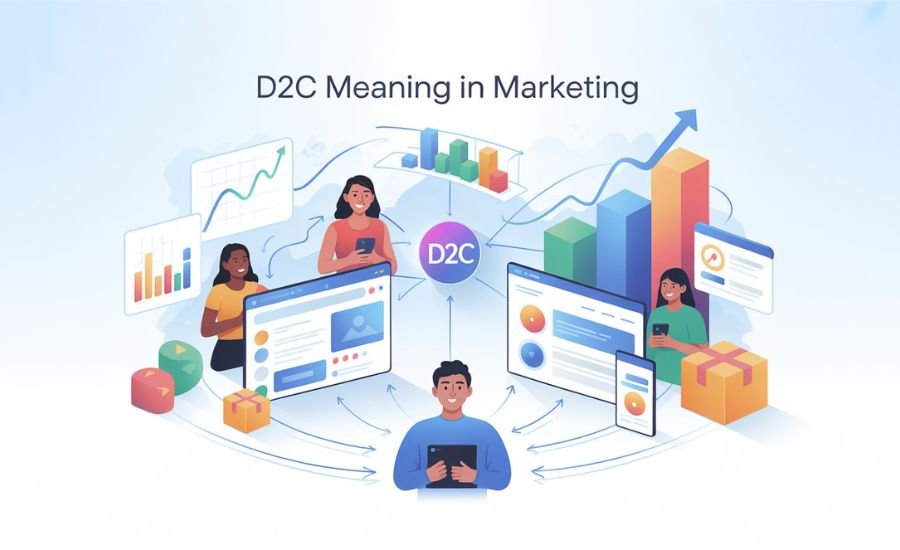
The way brands reach customers has changed a lot over the last few years. Stores and middlemen aren’t the only way to sell anymore. Many businesses now use D2C, short for Direct-to-Consumer. But what does D2C really mean, and why are so many brands switching to it? Let’s break it down in simple terms and show how companies sell directly to customers today.
What Does D2C Mean?
At its core, D2C meaning is simple: it’s when a brand sells its products straight to the customer, skipping retailers, distributors, or wholesalers. By doing this, brands have more control over the product, pricing, and customer experience.
Instead of relying on stores to showcase products, D2C brands connect with buyers directly, often online. This approach helps them understand their audience better, respond faster, and keep more of the profit.
How D2C Differs from Traditional Retail?
Here’s a quick way to see the difference between D2C and the usual retail method:
| Aspect | Traditional Retail | D2C |
| Sales | Through stores or third-party sellers | Through brand website, social media, or apps |
| Customer Info | Limited access | Full access to buyers and behavior |
| Pricing | Set by multiple parties | Fully controlled by the brand |
| Marketing | Broad campaigns | Personalized and targeted |
| Experience | Standard for everyone | Tailored to each customer |
The big advantage? D2C allows brands to build real relationships with their customers, which can lead to loyalty and repeat sales.
How the D2C Model Works
A D2C brand usually follows these steps:
- Create the product: Brands design and produce something their audience wants.
- Sell online: A website or app serves as the primary sales channel.
- Promote digitally: Social media, email campaigns, and paid ads drive traffic to the website.
- Engage with customers: Brands answer questions, gather reviews, and build loyalty.
- Deliver straight to buyers: Products are shipped directly, cutting out middlemen.
This model is flexible, scalable, and lets brands adjust quickly to what customers want.
Why Brands Choose D2C?
There are clear reasons why D2C is growing fast:
- Higher profits: No retailers mean brands keep more money per sale.
- Direct feedback: Brands get first-hand insights from customers.
- Stronger loyalty: Personalized experiences keep people coming back.
- Online shopping trends: Many buyers prefer buying directly from brands.
- Faster improvements: Feedback lets brands tweak products quickly.
Brands like Glossier, Warby Parker, and Dollar Shave Club show how powerful this model can be when done right.
Key Ways D2C Brands Market Themselves
D2C brands rely heavily on digital marketing to attract customers:
- Website: A well-designed online store is essential.
- Social media: Instagram, TikTok, and Facebook help brands reach their audience.
- Email: Personalized emails encourage repeat purchases.
- Ads: Targeted Google and social media ads bring traffic.
- Influencers: Working with influencers helps build trust and awareness.
A strong online presence is what allows D2C brands to thrive without physical stores.
Advantages of D2C
Some benefits of the D2C approach include:
- Control: Brands decide how products are priced and presented.
- Customer relationships: Direct interaction helps brands understand buyers better.
- Profit: Cutting out middlemen increases revenue.
- Data-driven: Brands can make smarter choices using customer info.
- Flexibility: New products and campaigns can launch faster.
Challenges D2C Brands Face
It’s not all easy. D2C has challenges:
- Marketing costs: Getting visitors to your website can be pricey.
- Shipping and service: Handling logistics and returns takes effort.
- Finding customers: New brands must work hard to build an audience.
- Competition: Many brands are now selling direct, so standing out is key.
Smart D2C brands invest in digital marketing and strong customer support to succeed.
Examples of Successful D2C Brands
Some brands have done D2C really well:
- Glossier: Beauty products are sold mainly online with social media marketing.
- Warby Parker: Eyewear brand with home try-on programs and online sales.
- Dollar Shave Club: Subscription-based shaving products shipped to customers.
- Allbirds: Eco-friendly shoes sold directly to buyers online.
These brands prove that D2C can create loyal customers and strong branding.
Why Digital Marketing Is Key?
Digital marketing is the engine behind D2C success. Without stores or middlemen, brands rely on SEO, social media, content, and paid ads to reach buyers. A smart online strategy helps attract the right audience and turn them into long-term customers.
Conclusion
The D2C business model is changing how companies sell. By skipping retailers, brands gain control, insight, and stronger relationships with their customers. Whether you’re starting a business or trying to grow an existing one, understanding D2C meaning in marketing is essential to staying competitive today.
Ready to Grow Your D2C Brand?
If you want to reach more customers directly and boost your online sales, Whack Digital can help. Our team specializes in SEO, digital campaigns, and social media marketing for D2C brands.